The Northern Netherlands has a future. By pulling the right strings, the region can keep up and even lead the way in economic development. Which strings are the right ones depends on many factors. In recent months, a lot of hard work has gone into various future scenarios so that the right decisions can be made.
Cooperation. That is what has always moved the Northern Netherlands forward. Think of the cooperatives of yesteryear, the joint efforts to build mounds, mounds and canals. Think also of the strong networks of today, the short lines between business, education and government.
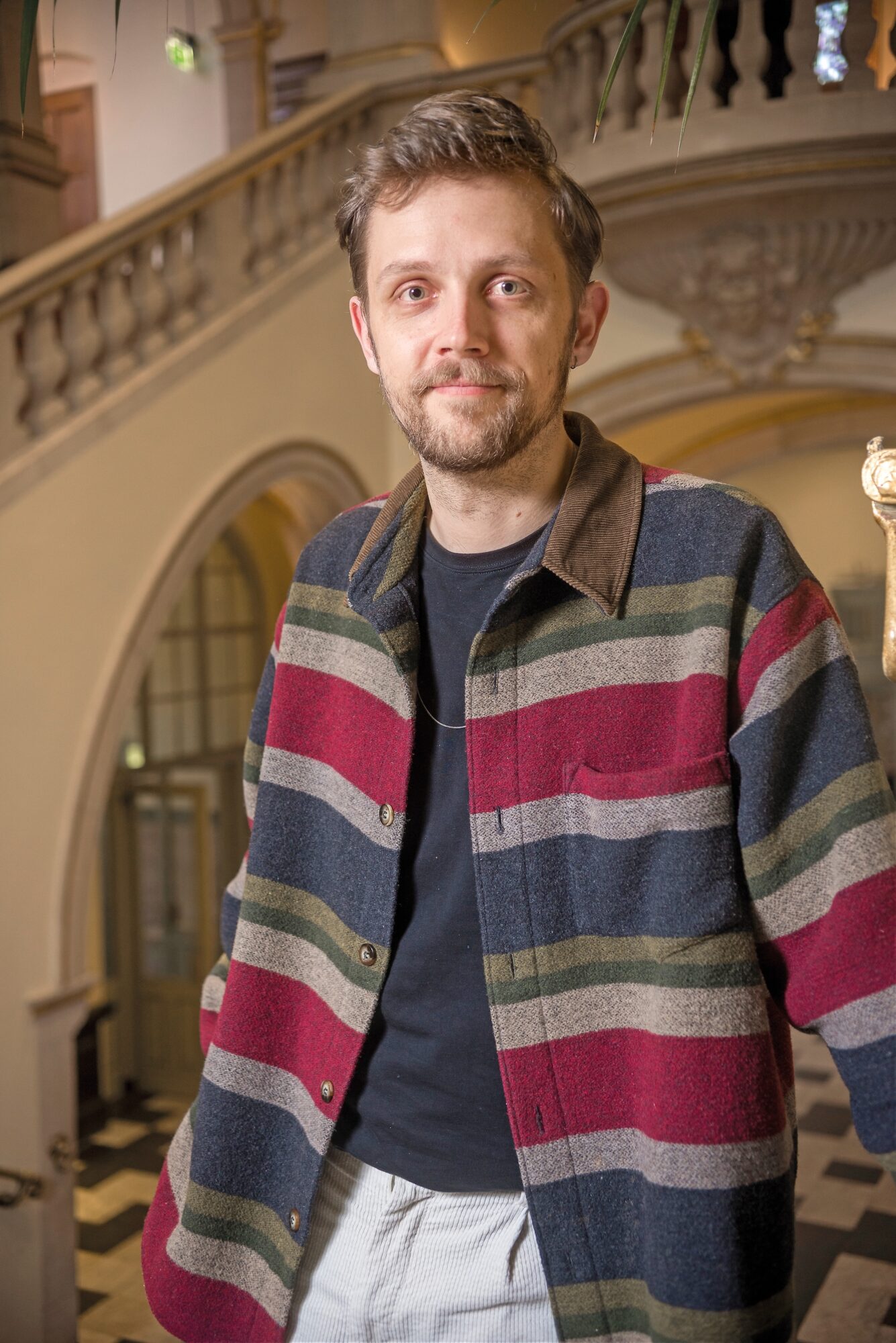
'At the end of the nineteenth century, as a result of industrialization, society became much more complex. This required new skills, new knowledge. Schools were founded, the government got more and more involved. There you can already see that networks were expanding, especially around agriculture and manufacturing. Later more clusters were added, such as chemical. These are patterns that emerged and are still continuing today," says Marijn Molema. He is associate professor of Regional Vitality & Dynamics at the University of Groningen.
Over the past few months, Molema and his students worked on a historical narrative about the industrious Northern Netherlands, commissioned by NOM. The immediate cause is the fiftieth anniversary of NOM. The story was fitted into a canon that is beautifully designed on the website.
Marijn Molema, rijksuniversiteit groningen"We need to redefine the word 'development' and put everything along the bar of broad welfare."

More than inspiration
The future of our part of the country is the starting point on that. If you want to know where you want to go, you have to know where you came from. Molema: "The past is inspiration, but more than that. You see processes that are still continuing today and that are important for the uniqueness of our region. Those undoubtedly also work through into the future, so you have to take that into account.'
The historian has a good example of this: agriculture. After the war, the government intensively guided the expansion of scale. It advised, shared knowledge and skills, played a role as an intermediary to achieve the higher goal. 'You see that we are now struggling with the consequences of that policy, namely the lost balance between economy and ecology. The past can help understand the challenges, as well as provide action perspectives. Historical organizational forms, such as agricultural extension services, in a new form can help in today's quest.'
Another image-defining process in the history of the Northern Netherlands took place in the late 1960s. Factories where many people were needed for serial production disappeared to low-wage countries. That awakened a sense of crisis, leading to new ideas: we need to start clustering, creating focus areas that are promising. NOM later played a role in that.
Molema: 'You see governments, education and entrepreneurs increasingly joining forces and thinking about what the strengths of the Northern Netherlands are. Geographically defined networks are becoming more and more powerful, especially in the 1980s.' He sees great advantages in this. 'Together you are strong. You help each other, you can jointly ask for attention and attract money. There is also a downside. By focusing on specific areas of interest you run the risk of blind spots developing, of beautiful initiatives not getting a chance because they fall outside the main focus areas.'
Redefining word development
All those developments led to where we are today, at a switching moment when the word transition seems to apply to almost everything. Molema: "We are in a time of change. For a century and a half it was all about more, more, more. Growth and development were expressed in terms of money. That is no longer possible because there are simply limits to our planet.'
So we need to look differently, at broad welfare. Social, spatial and cultural aspects are also important. 'We have to redefine the word 'development' and put everything along the bar of broad prosperity. That is also a task for NOM, to move with that progress. I think it is doing just that, for example by saying: we don't invest in everything. It's not just about economic returns, it's about what's good for the Northern Netherlands in a broader sense.'
"It's choosing, drawing attention to the right sectors, seeing what developments are going on and adjusting in the right direction."
Aleid Brouwer, rijksuniversiteit groningen
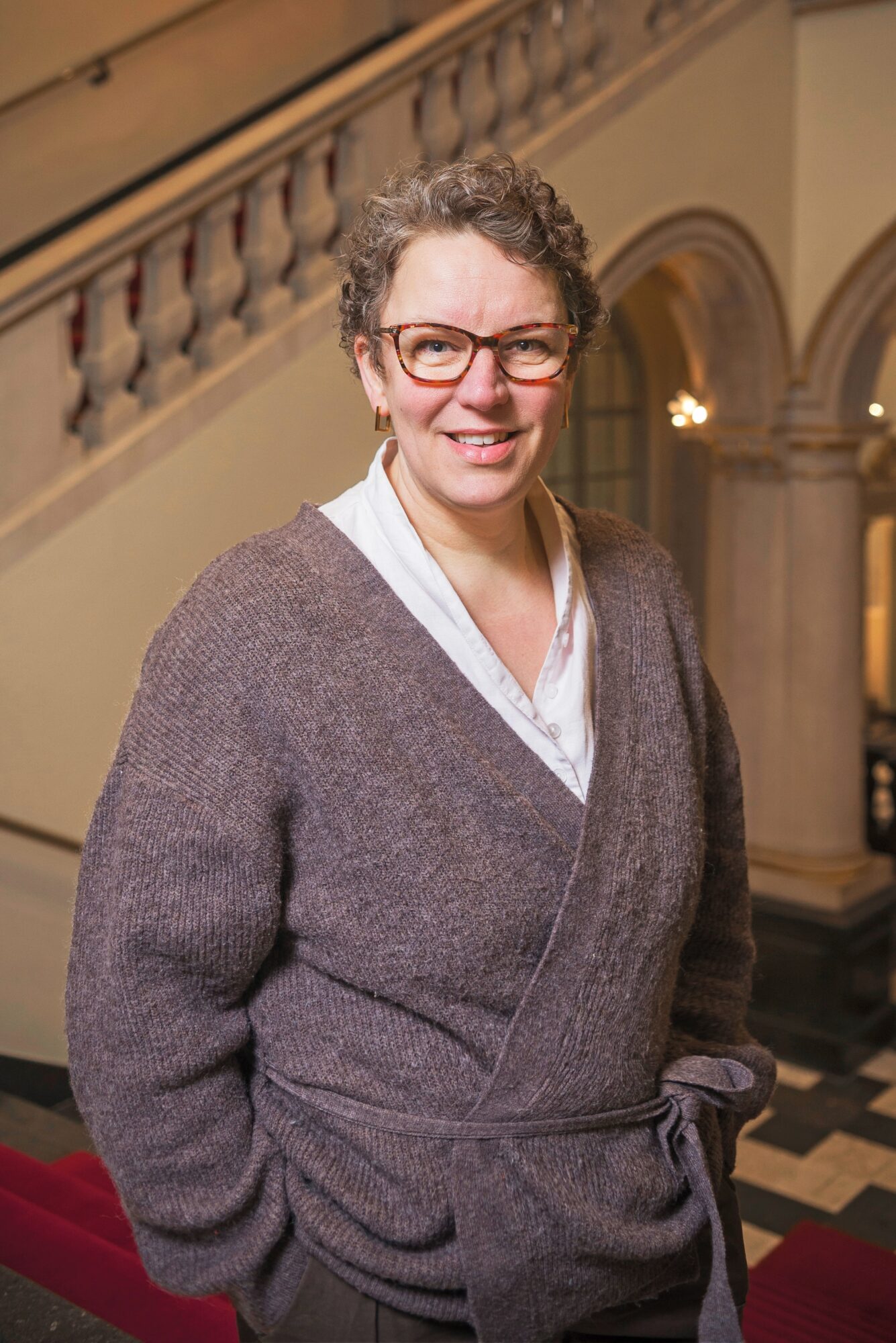
This is the future, which begins today. What tomorrow brings, no one knows. Taking different scenarios into account, however, is possible. And that is precisely Aleid Brouwer's field. The social geographer is extraordinary professor of Broad Prosperity and is much involved in drawing up future scenarios, in all sorts of fields. NOM asked her to do the same for the economic development of the Northern Netherlands. As she puts it herself: she can't predict, but she can suggest.
This is important in order to have the right perspective for action. If you know which way you want to go and you see which factors influence it, you can deploy the right instruments to keep the ship on course as well as possible. Together with many students, Aleid Brouwer developed four different future scenarios.
These include what our foreland looks like if there is more or less government involvement in the economy, if there are more or less technological innovations, if there is a greater or lesser penchant for regional self-sufficiency.
Fifty more years of importance
'You don't control everything. In such scenarios, we work out what to expect if external factors move one way or the other. That's essentially what we do. We use a method of thinking about the future so you can prepare for it, so you can make the right decisions.'
In recent months, her students spoke with numerous stakeholders. From entrepreneurs and managers to officials and experts. This created a picture of which factors could have the greatest influence on economic development in the North. That picture was translated into a system of axes along which economic development moves.
Does that sound abstract? Aleid Brouwer: "A simple example is brexit. Prior to the outcome of the vote, scenarios were undoubtedly made in all the countries of Europe. Will it be a brexit? Then this is what we can expect and must do. Will the United Kingdom stay in the European Union? Then we'd better do this and that. This is also how it works with our scenarios for the Northern Netherlands. Outside influences partly determine where things are going. By describing those different influences and thinking about how big their impact is, we give action perspectives. You don't have to be surprised anymore.'
That way you have more control over your own future. That is exactly what decision makers need, but also what NOM can benefit from. It means making choices, drawing attention to the right sectors, seeing what developments are taking place and steering them in the right direction. It is an instrument that helps to remain important in the economic development of the Northern Netherlands for at least another fifty years.
Looking critically
Historian Wiek van Gemert helped translate the students' work into historical timelines and future scenarios. Wiek van Gemert: "By looking at the different sectors of the northern economy, the picture emerges of an economy that has continued to develop despite setbacks. The North is a treasure trove of great stories. The students have mapped an awful lot of interesting information, which I have tried to bring together in a beautiful way.
From this a diverse picture of economic development emerges: an entrepreneur, such as Willem Albert Scholten, can be the driver of an entire sector; the same is true of a discovery of salt or natural gas, for example. But a strong sector can also drive other types of activity, such as agriculture that spawned a manufacturing industry for agricultural implements. The greatest common denominator in the North is cooperation: that plays a major role in the past, present and that is what the regional economy is geared toward in the future as well.
The same dilemmas keep cropping up in future scenarios, actually regardless of the sector the scenario focuses on. How can we radically combat climate change without collapsing the economy we have so carefully built in the North? How can we invest in strengths without putting people out of work? These dilemmas themselves also have a long history in the region, but the North, unlike in the past, has a starting position in which much is possible. If we want to shape the future to our liking, we will have to take a critical look at what is really of value, and dare to make hard and clear choices based on an open social debate.'
"Especially now that the economy is improving in the North, we need to look at more than just economic growth."
Wiek van gemert, rijksuniversiteit groningen