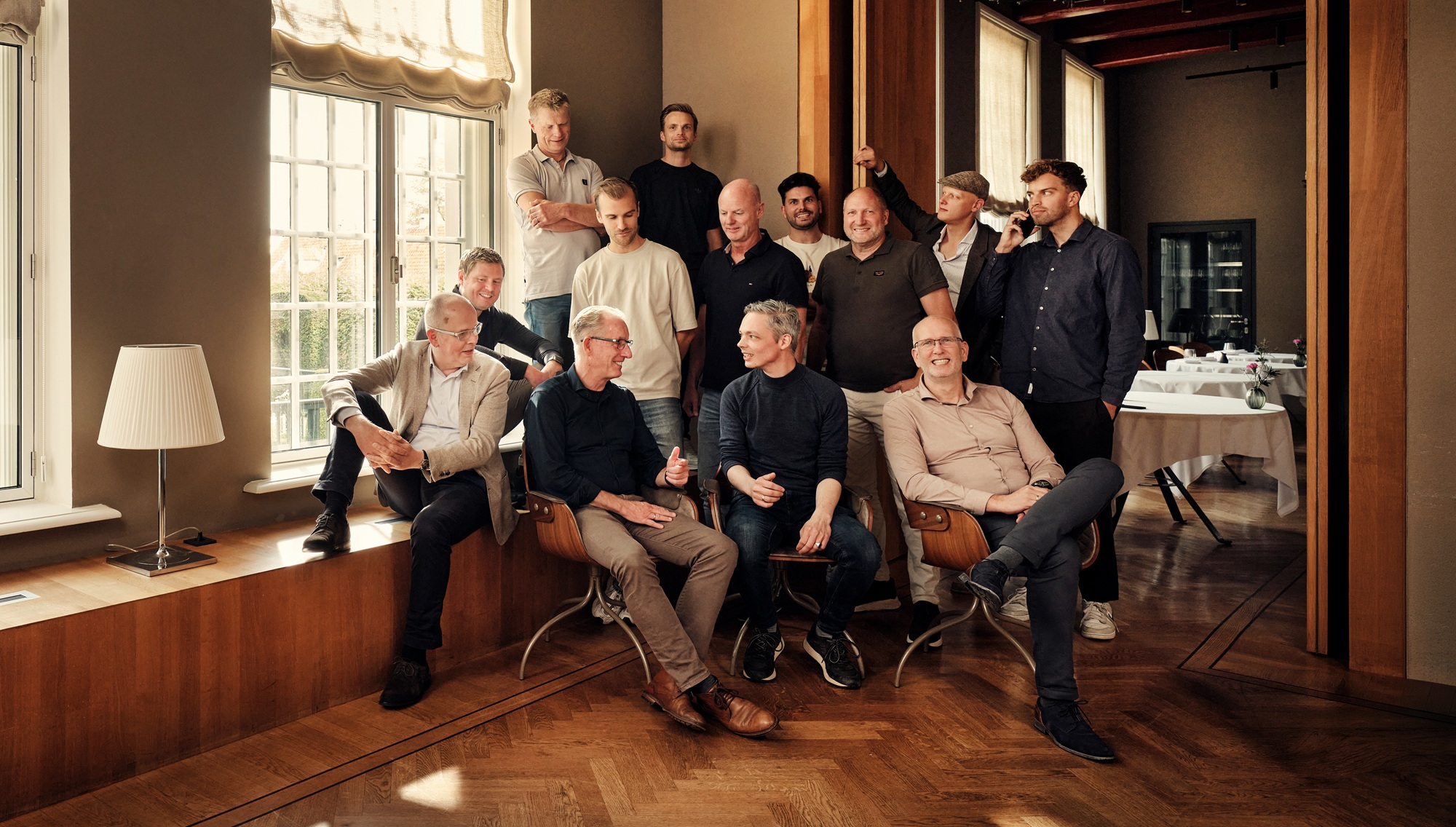

Through the Scale-Up Program, NOM helps leading startups in the north of the Netherlands grow into the next phase. For six months, this future generation of scale-ups tackles meaningful challenges under the watchful eye of experienced experts and coaches.
It’s Wednesday morning, September 30, shortly after 9:30. Today marks the kickoff of the Scale-Up Program, a program for ambitious startups in the Northern Netherlands that are on the cusp of the scale-up phase. In the Prinsenzaal of Hotel Prinsenhof in Groningen, nine entrepreneurs are seated, with coffee and notepads already within reach. They’re ready—that much is clear. Yet there’s a sense of healthy anticipation in the air. Understandable, since quite a lot will be asked of them over the next six months. “This isn’t just a standard program with fun masterclasses and useful information,” Steven de Groot said earlier. He is a business developer at NOM and closely involved with the program. “We’re really taking the participants on an acceleration track.”
No, not every startup is eligible to participate in the Scale-Up Program. NOM is exclusively looking for future frontrunners that have already gained traction and have the potential to make a real impact. The startups present today are on the verge of making the leap to the scale-up phase. And all of them have recently raised capital—which is also a prerequisite for participation. “That gives us peace of mind,” Steven explains. “They’re no longer actively seeking funding—which is often a full-time job in itself. Now they actually have the time to look ahead, develop a solid plan, and put that funding to good use to continue growing.”
A keen eye
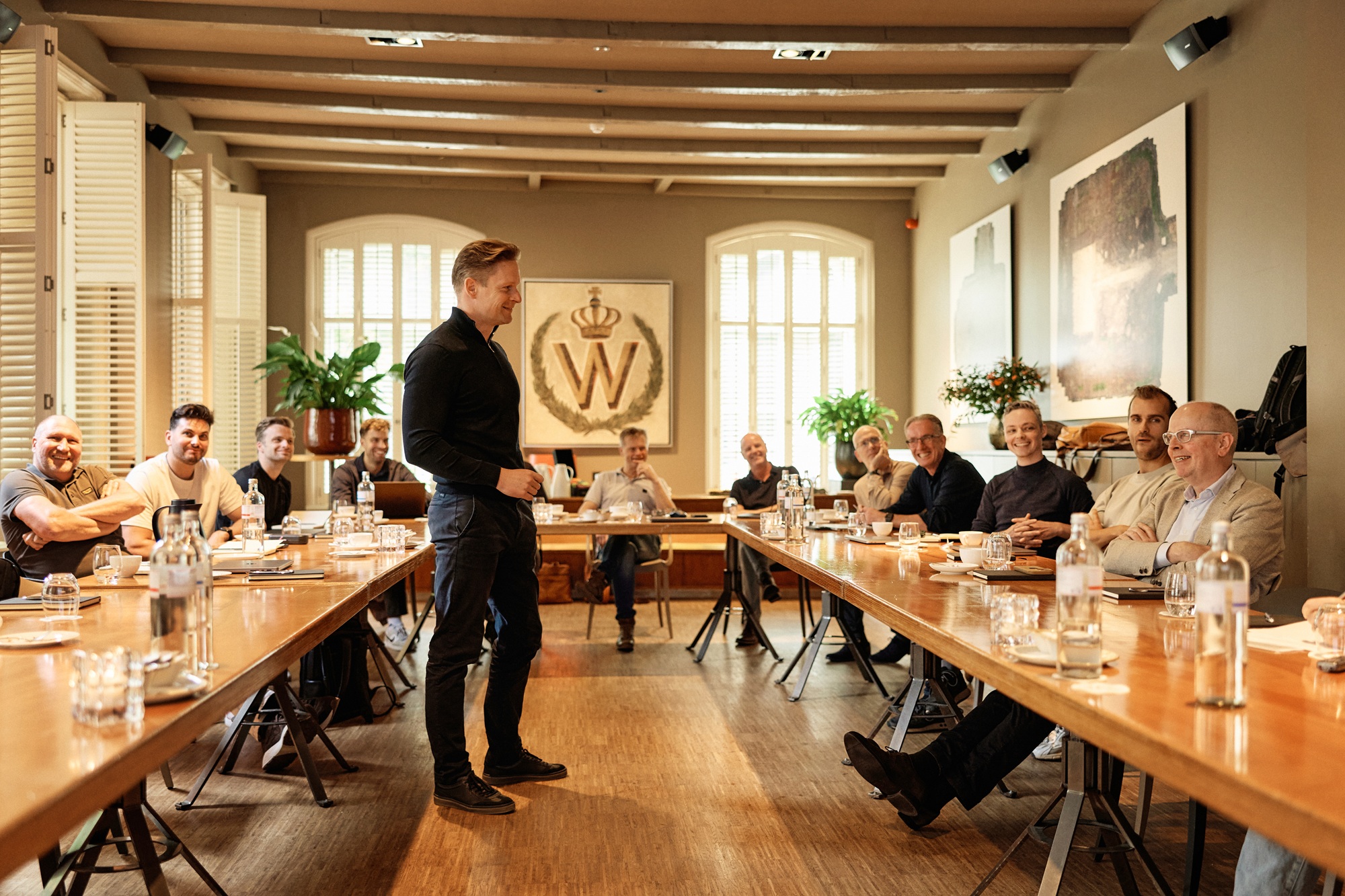
In the Prinsenzaal, the entrepreneurs take turns stepping forward to give a short presentation. They explain what they do, what problem their company solves, and what challenges they’re currently facing. Every now and then, they’re interrupted by Gijs van de Molengraft, who’s leading the session this morning. He’s one of the program’s coaches and co-founder of GRITD, a company that helps startups and scale-ups grow faster and more consistently. Gijs has a keen eye and makes sure to show it. He asks critical questions, often hitting the nail on the head. The tone is set right away. The participants know that there will be no beating around the bush in the coming period.
Before the program actually kicked off today, the startups underwent a comprehensive business analysis. “An intake,” Steven explains. “During that process, we focus specifically on the market, the team, and capital. What are the current obstacles or shortcomings, and how can we connect them with external expertise? Based on that, we draw up a development plan for each participant, with two to three key growth goals.”
Structured Approach
The Scale-Up Program was developed by NOM itself. Why was that actually necessary? “We noticed that startups often don’t seek help until they’re in a bind,” says Steven. “After raising their first round of funding, everything seems rosy. But once most of the money is gone, traction sometimes falls short of expectations. At that point, there’s hardly any room left to turn things around.”
At the same time, NOM saw an internal opportunity to enhance its support. When the organization invests in a startup, the investment managers fully leverage their own expertise and network to mentor the entrepreneurs. To give that personal mentoring even more impact, the NOM added a structured program, drawing on the specialized knowledge of external experts.
We’re really taking the participants through an acceleration program.
Steven de Groot Business Developer at NOM
The program focuses on hands-on action and providing insights that participants can immediately put into practice. For example, one-on-one sessions with experienced experts help address the most critical growth challenges. Masterclasses provide practical insights and expert input on various topics. The primary emphasis is on individual coaching. After all, that’s where the personalized approach comes in. And that’s precisely where the interventions and breakthroughs leading to further growth typically occur.
Each masterclass has its own theme, ranging from product-market fit to team scaling. Topics covered include: where do team members complement each other, and where are there still skill gaps? Who is responsible for which results, and how do you ensure that goals are actually achieved? And which growth strategy actually fits this specific business model? Ultimately, of course, it’s all about implementation. That’s why the masterclasses and one-on-one sessions largely run in parallel. What a participant hears and learns in a masterclass can be immediately applied in the one-on-one session with the expert.
Frameworks
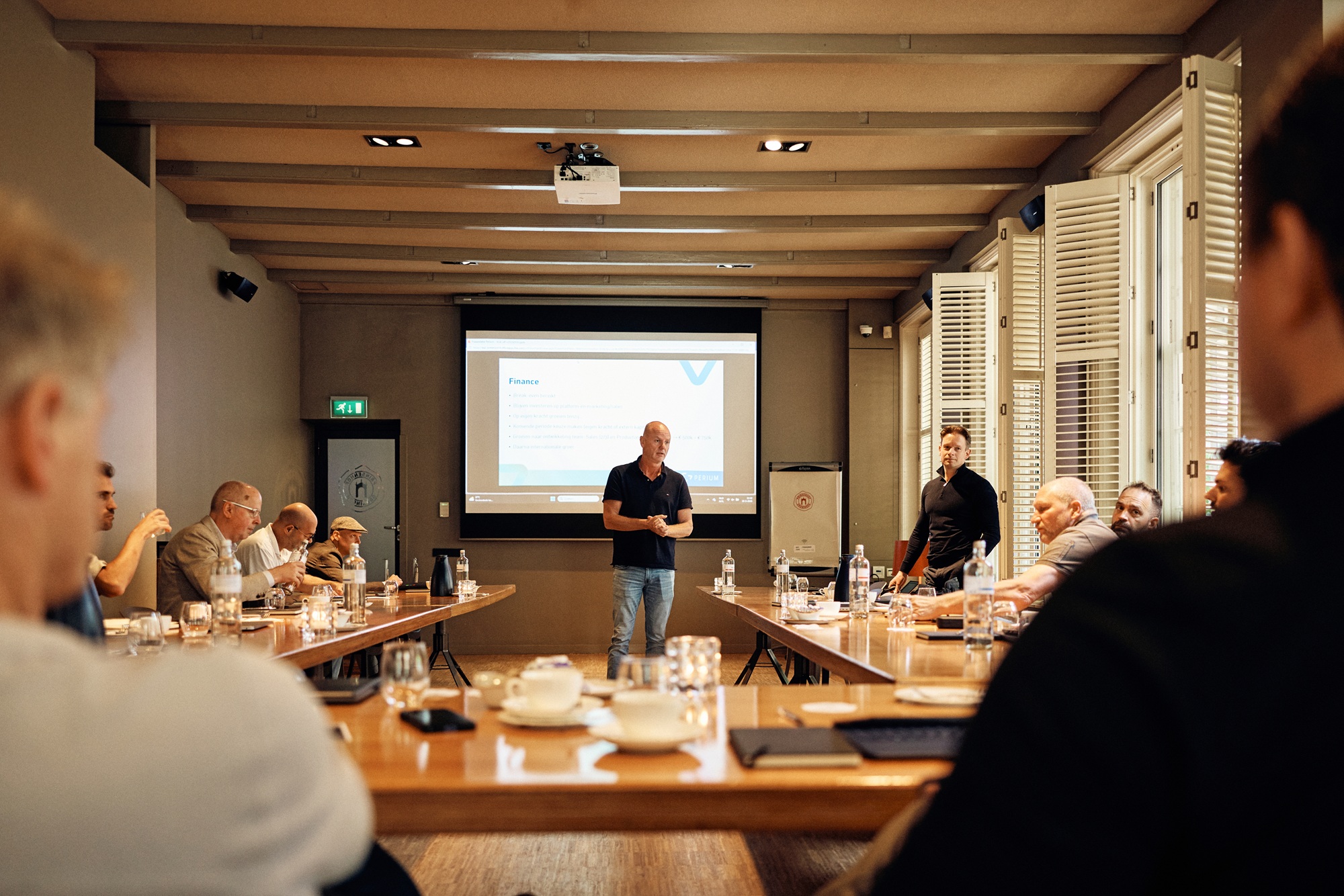
Back to the Prinsenzaal, where the morning is now drawing to a close. But not before Gijs talks about the StartupFramework. It’s more like a lecture, actually. The model breaks down the journey from idea to scale-up into four life stages and twelve milestones. A startup only moves on to the next step once it has demonstrably achieved the previous one. This immediately provides participants with the necessary framework to begin the program with full focus. That’s essential, because after all, growth requires more than just ambition.
Value Creation Beyond Funding
“For NOM, value creation revolves around two things at once: returns on our own portfolio and a region that grows alongside its companies. That’s why we want to be actively involved with our portfolio companies, through every step of the process. The Scale-Up Program aligns with how we’ve structured our programs across the various growth phases. First comes the NOM Startup Program, followed by the Investor Readiness Program. The Scale-Up Program focuses on the phase that follows: the startup has raised funding and must use those resources strategically to continue growing. In this process, participants learn not only from experts but also from one another. They face similar challenges and hold up a mirror to one another. In this way, we help companies better steer their growth and, ultimately, give something back to the regional ecosystem.”
Participating Companies
AIMZ: Less Energy, Better Indoor Climate.
AIMZ makes buildings more energy-efficient and improves indoor comfort. The Groningen-based startup integrates software and AI into existing climate control systems without requiring the replacement of the system itself. The technology has now gained nationwide traction, with the system already installed in more than 100 buildings. “We’re currently working with a model that includes a setup fee and a recurring fee,” says co-founder Piet Jan Bloem. “But we’ve noticed that this can sometimes be difficult to sell. That’s why we’re actually looking to move toward a SaaS solution. We expect that model to be easier to market. In addition, we plan to expand internationally by 2029.”
Digipharma: Ordering medication can be done much more efficiently.
“Digipharma, based in Groningen, offers a software platform that streamlines the medication ordering process. This helps pharmacies increase their profitability, improve medication availability, and reduce the pressure on healthcare professionals. After strong growth in the Netherlands, Digipharma is now facing its next phase: how do you translate that solid foundation into accelerated growth and further scalability? ‘Our next step is to further improve the scalability of our platform so we can increase our impact,’ says founder Patrick Keizer. “And that’s capital-intensive.”
ElasticScale: Cloud Infrastructure for SaaS Providers.
ElasticScale, based in Heerenveen, simplifies cloud infrastructure for SaaS providers with its ES Foundation platform. This platform optimizes the use of Amazon Web Services (AWS) by integrating security, scalability, and efficiency. The company, founded by Alex Jeensma, became profitable sooner than expected and continues to make significant strides
. “We know who our ideal customer is,” says Alex. “In the Scale-Up Program, I want to work with an expert to build a repeatable sales process. How do we reach those customers consistently?”
FrisianBAR: Reinforcing Concrete Without Steel.
FrisianBAR, founded by Harry Fietje, develops and manufactures composite reinforcement as a sustainable alternative to traditional steel in concrete, which lasts 20 to 25 years. Composite concrete reinforcement does not rust and has a lifespan of 100 years. The company builds on the many years of expertise of Autonational Composite Machinery. A fully automated production line will be built in IJlst this fall. “The technology is in place,” says Harry. “The next step is to find the right market, further validate customer demand, and secure certification. The Scale-Up Program helps us stay focused and make well-informed decisions.”
Perium: Getting a Handle on Compliance, Without Excel.
Perium, based in Groningen, helps organizations get a handle on compliance management—think, for example, of information security and food safety. The action-oriented Perium platform links standards, risks, and control measures so that companies no longer have to track them manually in Excel. “We’ve been in the market for four years now and broke even last year,” says co-founder Arjan Kremer. “We’ve now demonstrated our product-market fit. We’re growing quite nicely, but if we want to make really big strides, we’ll need to restructure our operations, and we may need additional capital. But what’s the best way to go about this? We hope the Scale-Up Program will help us with that.”
Primio: Training Healthcare Providers Smarter and Faster.
Primio helps the elder care sector get new people up to speed faster. Through an app, career changers, informal caregivers, and volunteers learn exactly what they need to get started in short training sessions, and they can quickly find answers to their questions while on the job. The company, founded by Christiaan Uythoven, Jules Weijdema, and Bette Burger, has raised nearly 3 million euros to date and hopes to break even next year. “We’ll likely need additional funding soon,” says Christiaan. “We need to gather evidence that we’ve found a strong growth engine. We also want to scale up into other sectors in the coming years.”
SPCTR: Knowing whether interfaces are clean even during surgery.
SPCTR is developing a device with AI-assisted optical imaging that allows a surgeon to determine within five minutes during a breast-conserving surgery whether a tumor has been completely removed, with sufficient healthy tissue surrounding it. Currently, that certainty requires days of lab testing. This innovation thus prevents unnecessary repeat surgeries for patients and improves the quality of care. “We are a research-oriented organization that is now making the transition to the market,” says co-founder Rowan Timmermans. “We’ve just completed our seed round, which will keep us going until mid-2028. We plan to enter the market early next year, and we anticipate a new funding round in early 2028 to truly scale up our operations.”
Teamy: Never short on players again.
The Teamy app helps sports teams get timely insights into team members’ attendance at games and practices, with added features for team members, coaches, and the club organization. What started as a hobby project is now a professional platform used by over 200,000 athletes in various countries. The ambition is to become Europe’s largest team sports app. “We’ve validated our product,” says co-founder Wander Evers. “But what’s next? How can we accelerate growth? That’s what we’d like to explore together in the program.”
Vector Machines: Autonomous robotic mowers for challenging conditions.
Vector Machines, based in Heerenveen, builds electric, autonomous robotic mowers for areas where obstacles and poor GPS reception make mowing difficult, such as solar farms. A combination of GPS-RTK and LiDAR keeps the machine on course even in those conditions. Machines are now in operation in various countries, and demand is high. “I hope to gain knowledge and support during the Scale-Up Program,” says co-founder Jan-Dirk van der Tol. “How do we take the right steps now that we’re scaling up? And how do we ensure we don’t get overwhelmed during that phase?”