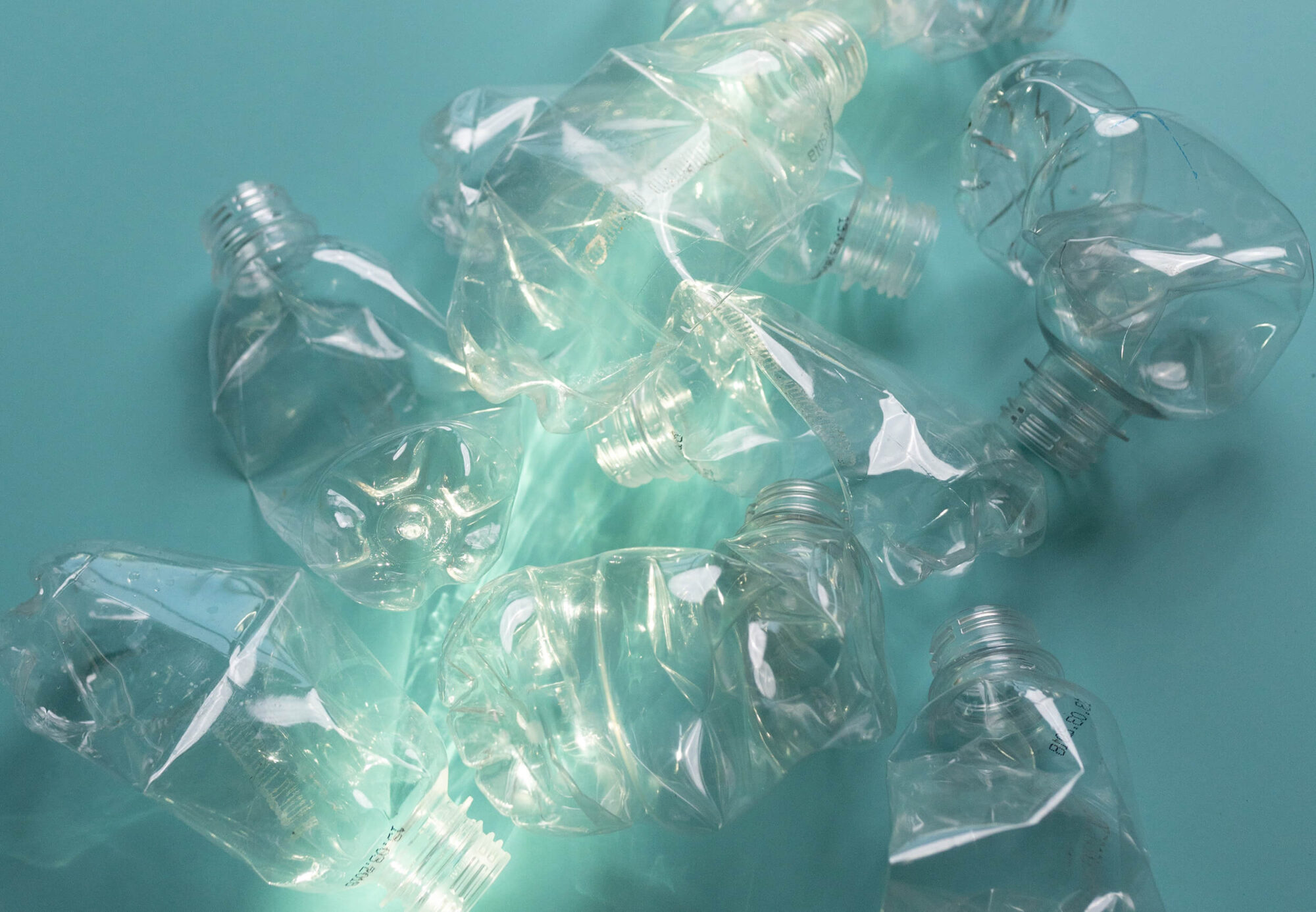
The world of the future on the site of the past. In a large factory in Emmen, polyester beads rolled off the conveyor belt for decades. Only recently they have been made entirely of recycled polyester. Unique.
Cure is the name of the technology being used in a pilot plant in Emmen that holds huge promise.
For the 91 percent of the world's polyester that until now has not been recyclable, a solution is within reach. Bottles, containers, carpet and clothing go into the machines and come out as the polyester raw material (pellets) used in the normal process of polyester processing plants.
''We are now scaling up to a demo plant, then we can roll out further,'' Marco Brons says. He is technical director of CuRe, a collaboration of the chemical companies Cumapol, Morssinkhof, DuFor and Niaga, in close cooperation with NHL Stenden University of Applied Sciences. ,,What we do attracts attention in the world. A lot of big corporations are watching us.''
I really feel that we in the Northern Netherlands are on our way to becoming a polyester valley.
marco brons (technical director cure)
That's not surprising. Cure solves a couple of big dilemmas at once.
The first is the growing waste problem. The global mountain of non-recyclable polyester is growing by 64 billion pounds annually. The main reason is that it contains dyes and additives that make recycling impossible.
By extension, it is currently still necessary to continuously make new polyester from petroleum. ,,We are striving to make that unnecessary, to infinitely reuse the polyester that is already there. We have come a long way in that regard. Most types of polyester fit into our process. Even most of the additives to the material and the colors, we will soon be able to take them out, leaving us with pure polyester grains.''
The third interest lies mainly in the textile world. There, the obligations to use recycled material are becoming increasingly stringent. Brons: ,,Material from recycled polyester bottles is now mainly used for this purpose. But you see a trend toward recycling from product to product. Bottles become bottles again, containers become containers again, and so on. So the textile industry has to find other solutions. The most logical one is to start recycling textiles themselves. That was always very difficult because of the colors and mixed materials, but we can do it.''

Making agreements in the chain
To get that movement rolling, CuRe is trying to reach agreements with policymakers and textile manufacturers. ''Ideally, it would be if we could get the number of dyes used down. Now there are about 80,000 of them, which can only be separated from the pure polyester through a fairly complicated process. Then we have to deal with the use of glue and other materials, such as zippers and labels. The better the agreements, the better the recycling process. The promises are great. Good recycled polyester has a much lower footprint as a textile, even much lower than that of cotton.''
CuRe actually combines two ways of recycling. The first step is mechanical recycling, a process that Cumapol - of which Brons is also technical director - has already mastered. Simply put, polyester is chopped into pieces, melted and formed back into pellets. To get the desired colorless end product, a chemical recycling process comes over it. This is called depolimerization.
Brons thinks the "demo plant" will be up and running by the end of 2023. In Emmen, of course.
This is the ideal environment for us. We work closely with companies around us, continuously take advantage of the ecosystem that is there. In this, the university and colleges are indispensable.
I really feel that we in the northern Netherlands are on our way to becoming a polyester valley.'' This is where it happens, this is where it starts. Eventually the whole world will benefit. Brons: ,,How do I envision it? That we set up recycling plants all over the world, at the places where polyester is collected."